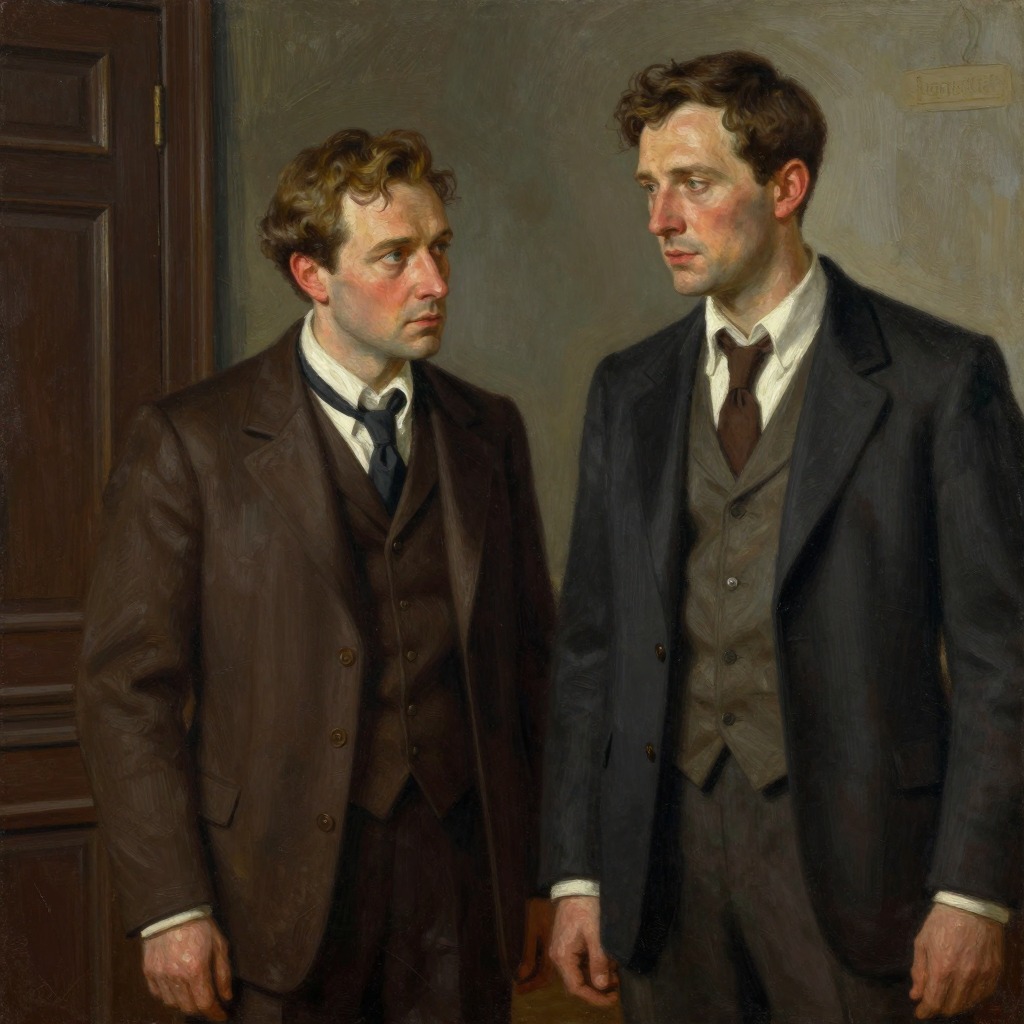
the cathedral
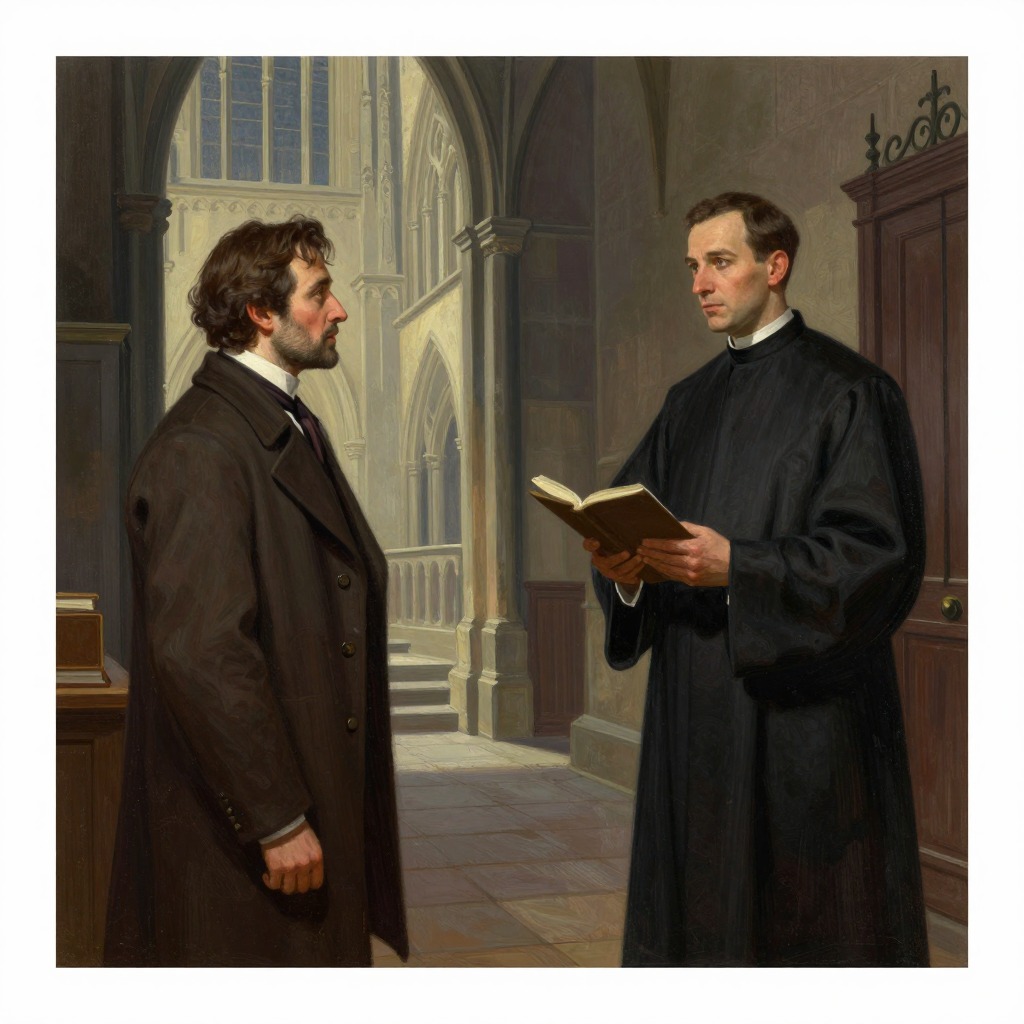
The cathedral is the most imposing and symbolically charged location Josef K. visits in the course of his trial. It is the setting for his only direct, extended conversation with a representative of the court who speaks not as a functionary but as a spiritual authority, the prison chaplain. The encounter takes place on a rainy, stormy morning, when K. has been sent to show an Italian business contact the cathedral's sights. The Italian never arrives, leaving K. alone in the vast, dark, and nearly empty building. The cathedral's scale and gloom—the stained glass sheds no light, the candles on the main altar are extinguished one by one—create an atmosphere of oppressive solitude and impending judgment. It is here that the chaplain, from a small secondary pulpit, calls K. by name and delivers the parable that becomes the novel's philosophical core.
The Encounter with the Prison Chaplain
K. arrives at the cathedral expecting to perform a routine professional duty, but the setting quickly transforms into a stage for his trial's spiritual dimension. The chaplain, a young man with a smooth, dark face, summons K. from the pulpit with a powerful, experienced voice that pierces the silence. K. initially tries to leave, but the chaplain's call traps him; he acknowledges his identity and approaches. The chaplain tells K. that his case is going badly and that his guilt is considered proven, at least provisionally. K. protests his innocence, but the chaplain dismisses this, saying "that is how the guilty speak." The conversation moves through the cathedral's dark side naves, the lamp K. carries having long since gone out. The chaplain warns K. against seeking help from women, a strategy K. has pursued with Miss Bürstner, the court usher's wife, and Leni. The chaplain's tone shifts from gentle to angry when K. criticizes the court, shouting, "Can you not see two steps in front of you?"
The Parable of the Doorkeeper
The centerpiece of the cathedral scene is the chaplain's recitation of the parable "Before the Law." A man from the country comes to the door of the law and asks for entry, but a doorkeeper tells him he cannot enter now. The man waits for years, bribes the doorkeeper, and grows old and senile. Just before his death, he asks why no one else has ever sought entry, and the doorkeeper replies that this entrance was meant only for him and now he will close it. K. immediately interprets the story as a deception: the doorkeeper cheated the man by withholding the information until it was useless. The chaplain offers a series of competing interpretations, arguing that the doorkeeper may have been faithful to his duty, that he may have been simple-minded, or that he himself may have been deceived. The chaplain's final, unsettling conclusion is that one need not accept everything as true, only as necessary. K. responds with the novel's most devastating aphorism: "The lie made into the rule of the world."
The Cathedral as a Space of Judgment
The cathedral functions as a threshold space between the mundane world of the bank and the final, irreversible judgment of the execution. Unlike the court offices in attics and tenements, the cathedral is a consecrated, monumental space, yet it offers no comfort or clarity. The chaplain, though a representative of the court, tells K. that the court demands nothing from him: "It accepts you when you come and it lets you go when you leave." This statement, delivered in the darkness of the cathedral, leaves K. with no further guidance. The parable he has heard does not offer a strategy for acquittal but a meditation on the nature of the law itself—its inaccessibility, its personal address, and its ultimate closure. When K. leaves the cathedral, he is not freed from his trial but sent toward its end. The cathedral thus marks the point at which K.'s hope for a rational, favorable outcome is replaced by a grim acceptance of the necessity of the proceedings, a shift that prepares him for the final scene at the quarry.